Milan
Liessens Dujardin
Machine Learning Engineer • Data Scientist • Musician


I'm passionate about the intersection of music, machine learning, human simulation, and human-AI co-creation. My current work focuses on post-training ALMs for musical understanding and reasoning, and controlling audio effects from natural language for music post-production (PWFX). I am also doing research on simulating user behavior for UI testing, as well as how LLMs can help designers reach better design outcomes through supported ideation following the C-K Design Theory. My background spans from commercializing cutting-edge technologies at Lawrence Berkeley National Laboratory to machine learning engineering. Currently, I am pursuing my M.Eng. in Electrical Engineering and Computer Science at UC Berkeley, with a concentration in Data Science..
Focus on machine learning, deep learning, natural language processing, computer vision, and human-AI interaction.
Developed commercialization strategies to bring innovative technologies from Lawrence Berkeley National Laboratory to market.
This project focused on bridging the gap between cutting-edge research in high-performance computing from Lawrence Berkeley National Laboratory and commercial applications. I conducted extensive market research, patent analysis, and competitive landscape assessments to identify opportunities for superconducting, neuromorphic computers.
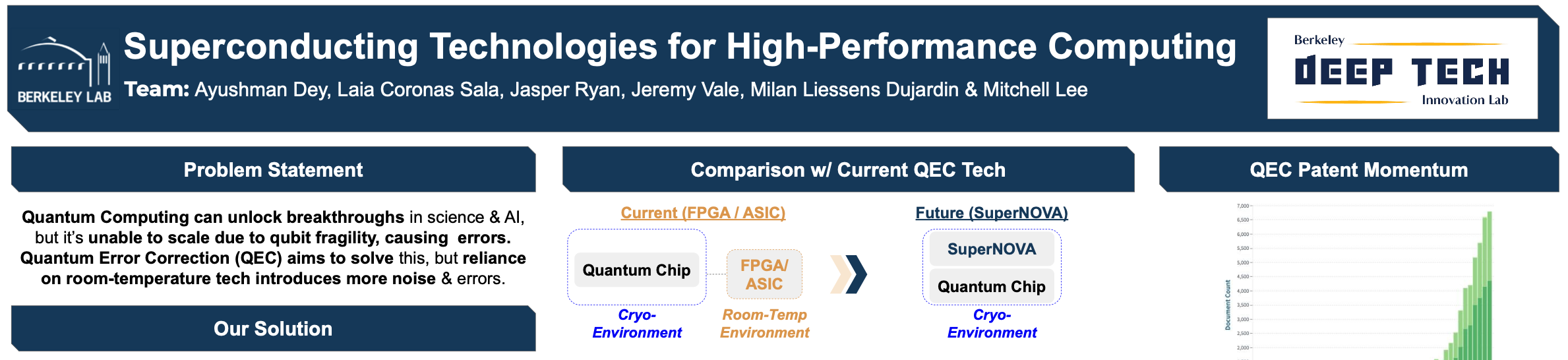
Collaborators: Ayushman Dey, Laia Coronas Sala, Jasper Ryan, Jeremy Vale, and Mitchell Lee.
Developing a tool to automate user experience research through user simulations.
Leveraging AI to simulate user behavior and automate the UX research process, informing PMs about next product iterations.
Status: ResearchDeveloping a tool that supports musicians in their learning process and compositional work.
Nov aims to combine music theory with machine learning to become an intelligent assistant for musicians. The tool intends to help with practice routines, composition suggestions, and musical analysis through advanced musical understanding and a multimodal interface.
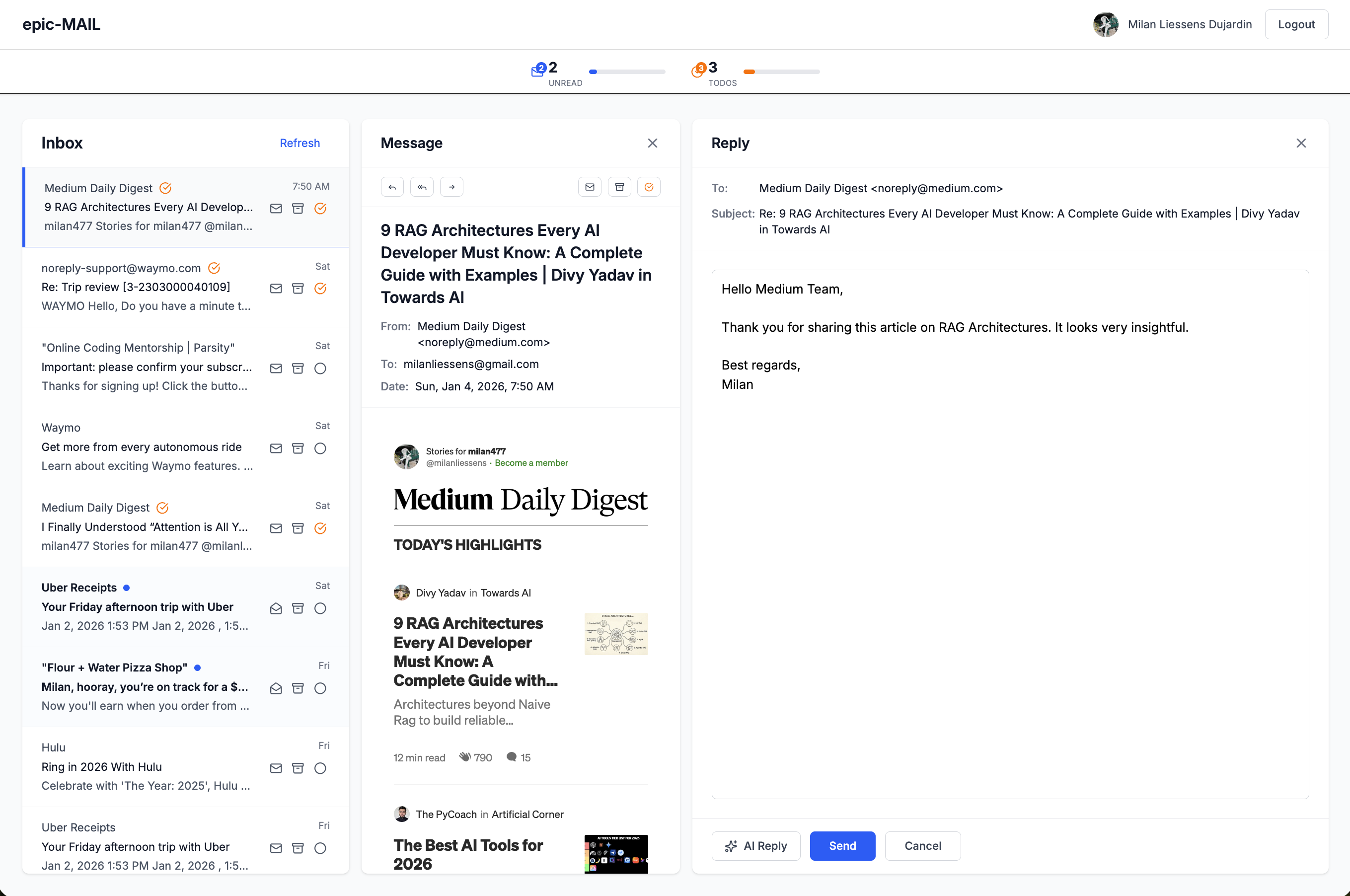
Status: ResearchAn email client with AI-powered features to help users manage and respond to their emails more efficiently.
Existing email clients are often inefficient and just don't have the features users (I) want. This project aims to turn exasperating-MAIL into epic-MAIL (the real reason why they put an 'e' in front of 'mail').
I sometimes improvise or compose. I have also collaborated with talented artists doing cool stuff.
This piece was created using sounds from a modular synthesizer and was edited in Logic Pro X.
A peek inside the donkey's mind.
An improvisation in 7/8.
'Stripped' was created in collaboration with Zita de Aguirre y Otegui, Illa De Preter, and Adrián Henríquez.
Automated Disaster Assessment from Satellite Imagery.
We present a systematic analytical framework for classifying disaster types and assessing damage levels in satellite imagery under severe data scarcity and extreme class imbalance. Our methodology extracts signal from noisy, limited data through three interdependent components: (1) structure-preserving artifact correction (mirroring-based occlusion handling) that outperforms naive imputation and generalizes across model families; (2) exploratory data analysis guiding feature engineering to identify generalizable discriminative features based on color distributions and structural patterns; and (3) task-aware model selection comparing classical and deep learning approaches under realistic constraints.
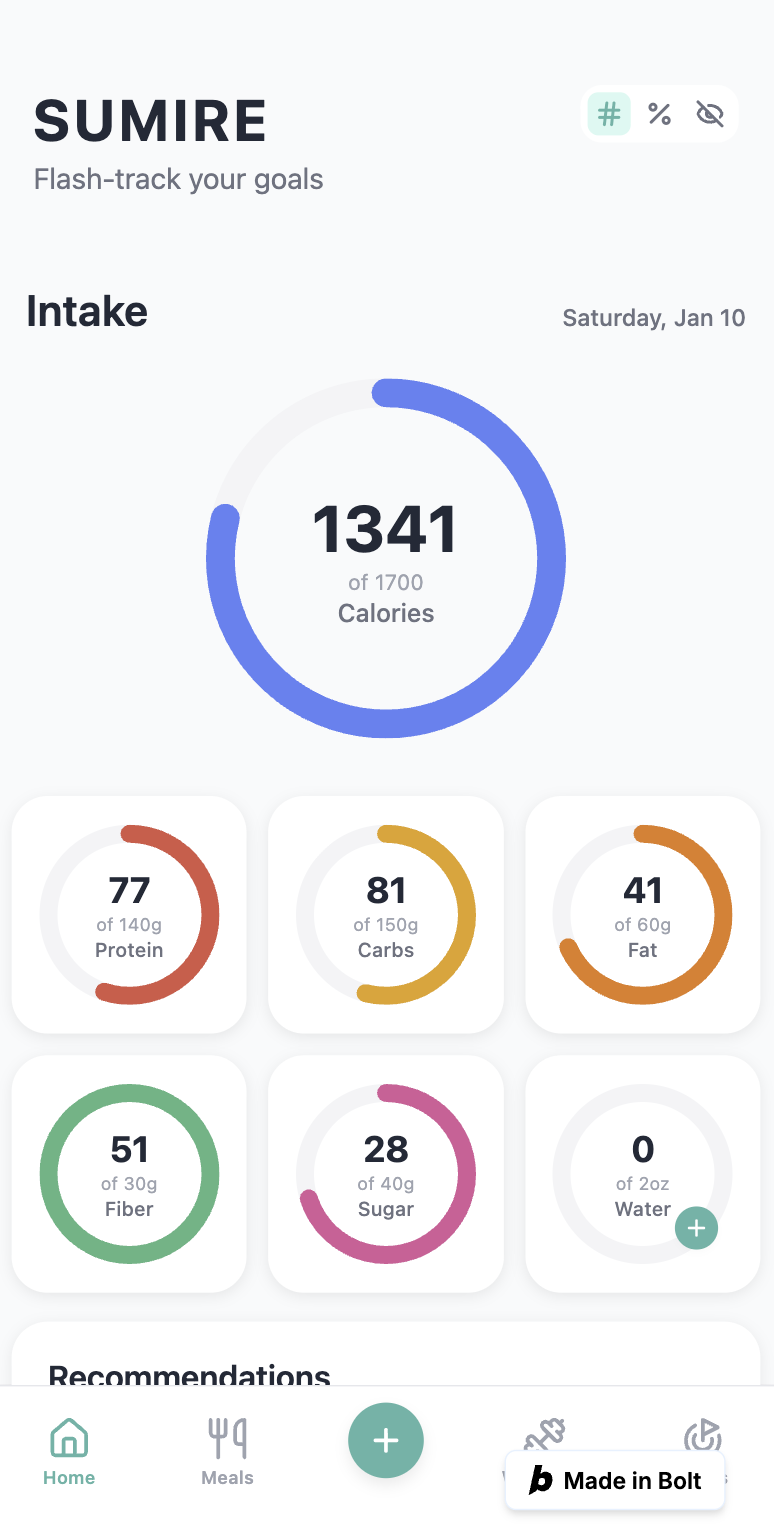
A low-friction, intelligent meal and workout tracking application.
Vibe-coded a prototype for SUMIRE, an app designed to simplify meal and workout tracking using AI. Conducted 4 extensive customer discovery interviews to validate/reject my hypotheses and refine the product concept and features. My prototype is under construction here. Feel free to try it out: just upload a photo of your meal. SUMIRE means violet in Japanese.
Key findings from interviews and the product discovery process include (1) Looking for a problem to the solution limits thinking outside the box. (2) Product discovery is about finding commonalities in what people image the product to be. (3) Fast logging attracts users; accuracy and comprehensiveness retain users. (4) Fundamentally, users want to establish a lasting, healthy relationship with food and exercise.